

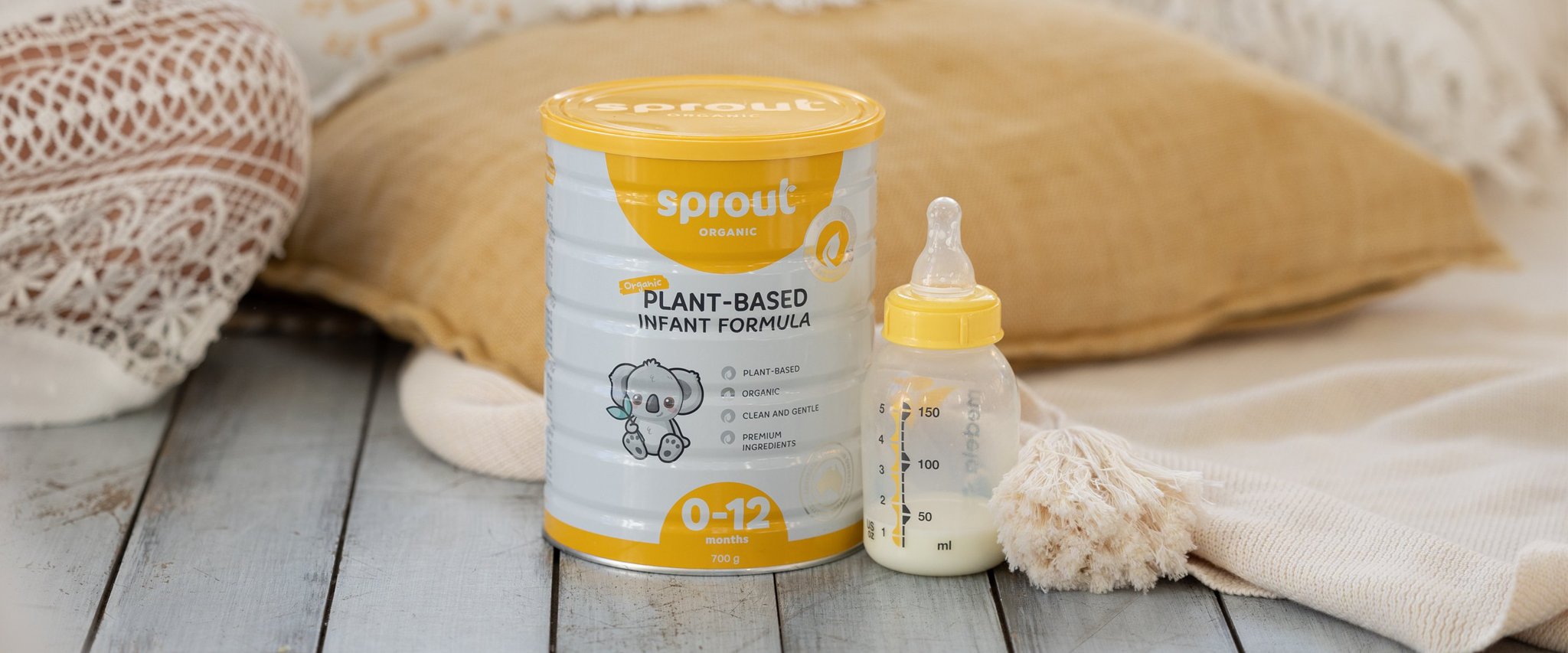



Growing Up Gently: A Guide to Transitioning from Infant to Toddler Formula
For families who care about organic, allergy-conscious nutrition — from first spoonfuls to family meals.
A Gentle Note Before You Begin
If your little one is approaching their first birthday, chances are mealtimes look pretty different to how they did a few months ago. Purées have given way to finger foods, family meals are becoming a shared experience, and formula is shifting from being the main event to a supporting role.
This guide walks you through why toddler formula is different, how it fits alongside solid foods, and a simple, gradual approach to making the switch — with the same organic, plant-based, allergy-conscious values you chose Sprout Organic for in the first place.

When Does the Transition Happen?
Most toddlers move from infant formula to toddler formula somewhere around 12 months of age, once solid foods are firmly part of the daily routine rather than an occasional taste. It's less about a birthday and more about readiness — a mix of age, appetite for solids, and your health professional's guidance.
Signs your little one may be ready
- Eating a variety of solid foods most days, including iron-rich foods (meat, legumes, fortified cereals)
- Drinking confidently from an open cup or straw cup with support
- Showing less interest in large formula feeds, favouring meals and snacks
- Has reached their first birthday, or is approaching it
As always, check in with your GP, paediatrician or child health nurse before making the switch — especially if your little one has a diagnosed allergy, reflux, or growth concerns.
Why Toddler Formula Is Different
It's a fair question — if your toddler is already eating a range of foods, why formula at all? The honest answer: toddlers are notoriously inconsistent eaters, and toddler formula is designed to gently fill nutritional gaps, not replace the meal itself.
The biggest shift is one of role, not just recipe: infant formula is built to be a sole source of nutrition, while toddler formula is a complementary drink that sits alongside — never instead of — a growing variety of solid foods, water, and family meals.
Fitting Formula Around Solids, Not the Other Way Around
By this stage, solid foods should be doing most of the nutritional heavy lifting, with toddler formula playing a supporting role — similar to how cow's milk or a fortified plant milk might be offered to a toddler who isn't formula-fed.
A simple way to picture the day
- Meals first: offer solids at breakfast, lunch and dinner, alongside water
- Formula as a top-up: 1–2 serves a day, often with breakfast and before bed, rather than before every meal
- Timing matters: offering formula right before a meal can blunt appetite for solids — try leaving a gap where you can
- Let appetite lead: some days your toddler will eat more food and want less formula, and that's completely normal
Organic and Allergy-Conscious, By Design
Sprout Organic's plant-based toddler formula in Australia is made with organic ingredients and carries organic certification, formulated with the same care that guided our infant formula — because switching stages shouldn't mean switching values.
What families ask us about most
- Plant-based formulation: no cow's dairy protein in the base formula
- Certified organic ingredients, from source through to manufacture
- No artificial colours, flavours or preservatives
- Formulated with common allergens in mind for families navigating dietary needs
If your toddler has a diagnosed allergy or intolerance, always confirm suitability with your allergist or paediatrician before introducing any new formula, and introduce it separately from other new foods so any reaction is easy to identify.
A Gradual Transition Plan

Little tummies generally prefer gradual change. Rather than switching overnight, blend the two formulas across a week, adjusting the pace to suit your toddler.
If you notice unsettled tummies, changes in stools, or new skin reactions at any point, pause and hold at the previous ratio for a few more days before continuing. If symptoms persist, check in with your health professional.
Tips for a smooth switch
- Introduce toddler formula in the same cup or bottle your toddler already knows, to keep the rest of the routine familiar
- Choose a calm feed (like the morning one) for the first taste, rather than the end of a long day
- Keep offering water between feeds as thirst cues develop
- Expect small fluctuations in appetite during the week — this settles as the new formula becomes familiar
Common Questions
Do I need to stop breastfeeding to introduce toddler formula?
Not at all. Breastfeeding alongside solids can continue for as long as you and your toddler would like — toddler formula is simply an option if and when you're reducing or stopping breastfeeds.
How much toddler formula does my little one need?
This varies by appetite and diet, but many toddlers settle around 1–2 serves a day once solids are well established. Your child health nurse or paediatrician can help tailor this to your toddler.
What if my toddler refuses the new toddler formula?
This is common and usually about taste or texture familiarity rather than anything being wrong. Slow the transition down, try a different time of day, or offer it alongside a food your toddler already loves.
Can I keep using infant formula past 12 months instead?
Many families do continue infant formula a little longer, and that's a perfectly reasonable choice to make with your health professional. Toddler formula isn't compulsory — it's simply formulated for this next stage, if and when you choose to use it.

We're Here Alongside You
Every toddler's path from milk-led feeding to family meals looks a little different, and there's no need to get it perfect. If you have questions specific to your little one — allergies, sensitivities, or anything in between — our team and your health professional are both here to help.
Leave a comment